| ||||
There are several ways to find the information you are looking for on Science Prof Online (SPO):
1. Do a keyword search.
2. Browse SPO main topics using navigation menus at top of the page.
3. Check out the Featured Animal Behavior Articles below:
- Fixed Action Patterns: Instinctive Behavior of FAPs
- Why Do We Yawn? Fixed Action Pattern of Yawning
- Horse Behavior as a Prey Animal: Why Horses Spook Easily & Live Socially
- Horses Long-term & Sequential Memory: How Learning & Memory Impacts Training
- African Cichlid Main Page from Science Prof Online (SPO)
- African Cichlid Tank Set-up and Care from SPO

Animal Behavior
from Science Prof Online
| ||||||
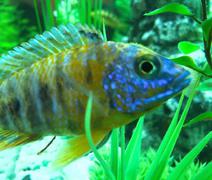
African cichlids are colorful fascinating freshwater aquarium fish. Meet the Cichlids we house in our 29-gallon tank and see a video of their behavior! We also offer a Printable African Cichlid Displacement Behavior Sheet
that can be used to score fish interactions and determine dominance hierarchy.
| ||||
Click link for a Word document exercise which allows students to practice the scientific method by designing a simple animal behavior experiment with pillbugs!


What Is Ethology? \ē-thä-lə-jē\: Animal Behavior
In addition to learning more about the fascinating lives of animals, the study of animal behavior also helps us better understand ourselves and the evolution of human behavior.
How Do I Use This Site?


SCIENCE PHOTOS

SPO VIRTUAL CLASSROOMS
| ||||
Listen to the fascinating Radiolab episode
The VMC offers many

Ethology is the scientific study of animal behavior (particularly how an animal behaves in its natural environment). From simple sensory responses to the complex interactions of highly social creatures, an animal's behavior all comes down to its attempt to survive and reproduce, ensuring that its genes are passed on.
The Biology of Animal Behavior
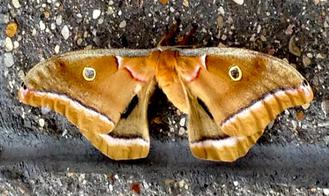
A beautiful example of form and behavior working together in an animal's survival is the Automeris moth. When its wings are closed, it is camouflaged. The moth opens it's winges when in danger, revealing what looks like the eyes of a larger animal.
Page last updated: 1/2016
For example, yawning is a very primitive type of behavior called a fixed action pattern (FAP). It's hard wired. Have you ever tried to stop a yawn once it's started? You can't. Once the behavior begins, it must play out to the end.
The existence of FAPs was first noted by ethology pioneers Konrad Lorenz and Niko Tinbergen who, in 1973, shared a Nobel Prize with Karl von Frisch for their poineering contributions to the field of animal behavior.
Want to learn more? Explore the links below or search the SPO site to see why animals and people do the things that they do. See the official web site of the Animal Behavior Society for even more ethology information.

Tami Port, MS
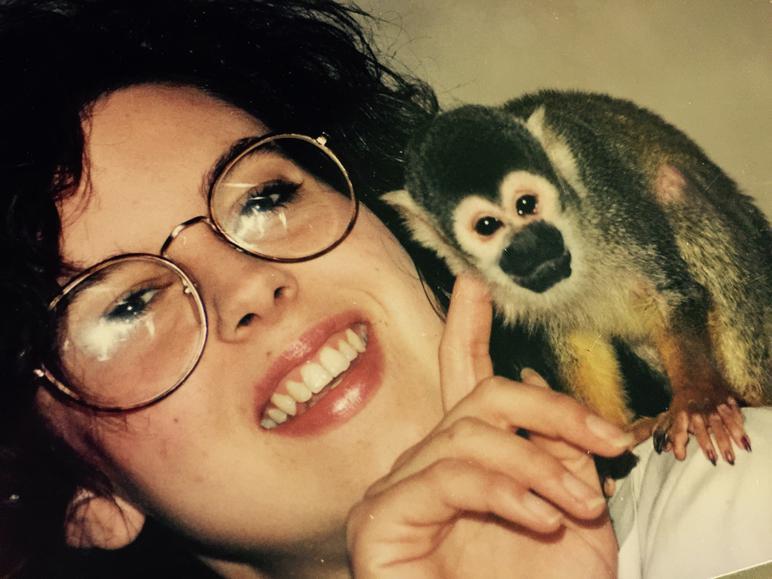
Chief Executive Nerd of Science Prof Online & College Biology Instructor (with good buddy "Captain" the squirrel monkey).