
 | ||||

Bacterial Colony Morphology
& Identification of Bacteria

Microbiologists often need to grow bacterial colonies in pure cultures, meaning that the sample is all the same type of bacteria.
For example, if a person is sick from a difficult-to-diagnose bacterial infection, a clinical sample of bacteria is obtained from the patient and then plated—streaked onto a Petri dish of bacterial growth medium and incubated for growth.
There will likely be many different types of bacteria in a clinical sample, so some of the bacterial colonies that grow will need to be isolated and tested to determine which type of bacteria is causing the illness.
Article Summary: A bacterial colony consists of numerous bacterial cells derived from one parent. Colonies of different types of bacteria can be distinct in appearance.
Bacterial Colony Morphology & Identification of Bacteria
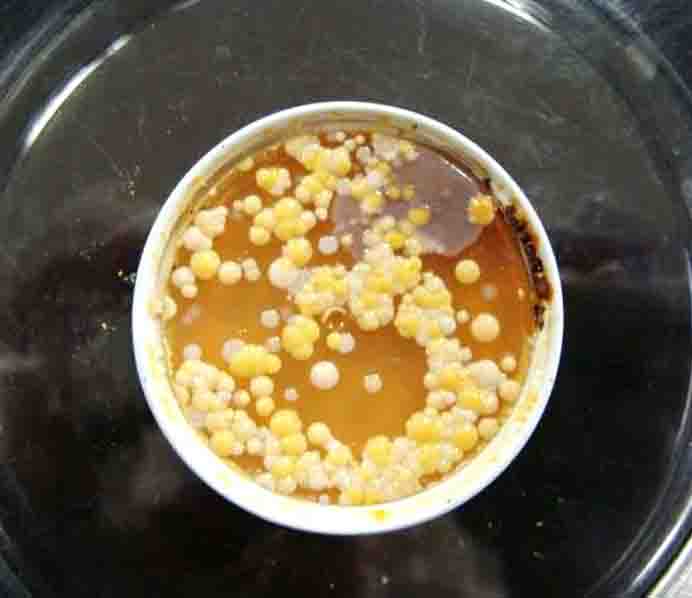
Normal flora bacterial colonies growing on an arm plate (a bottle cap filled with TSY, placed on the skin of the arm and then incubated).


SCIENCE PHOTOS
| ||||||
SPO VIRTUAL CLASSROOMS

Still, recognizing differences in colony morphology is useful when trying to isolate bacteria and also when plates of pure culture have become contaminated. If the majority of colonies in what is supposed to be a pure culture are similar in appearance, but there are a couple of colonies that look different from all of the rest, the experienced microbiology student knows not to sample from the oddball colonies, as these colonies have arisen from contamination of the plate.
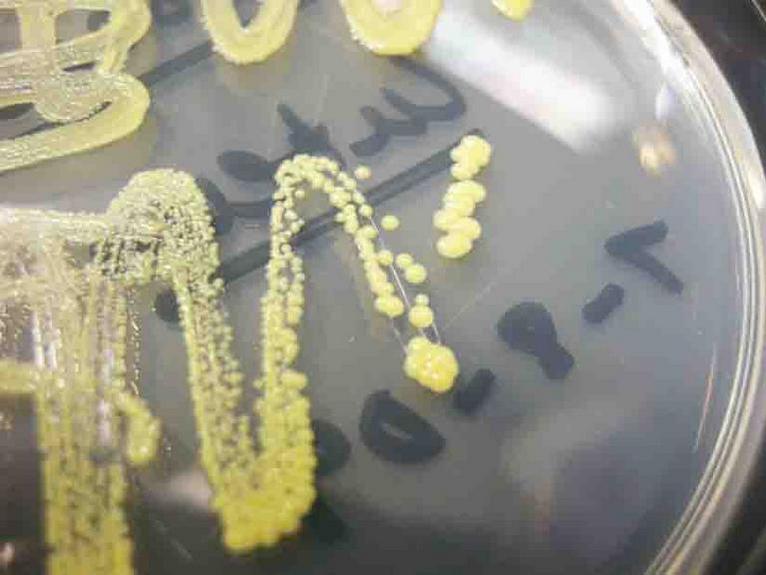
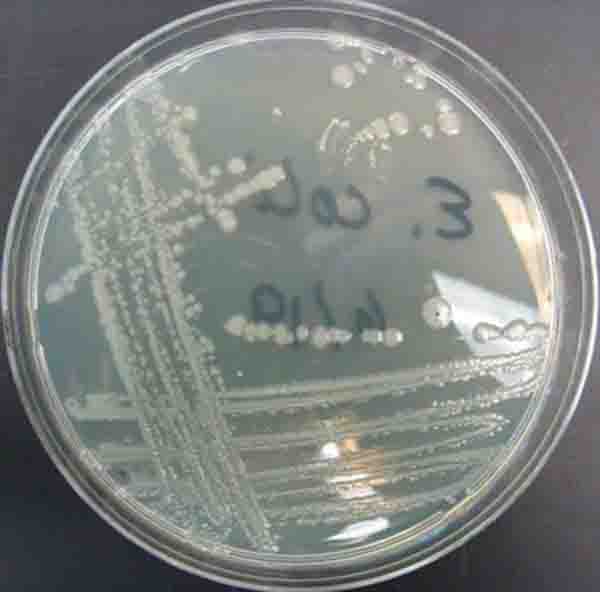
Above: Streak plate of Micrococcus luteus bacteria on Tryptic Soy Agar (TSY). Note small round yellow isolated bacterial colonies. Below: TSY streak plate of E. coi.
Continued ...
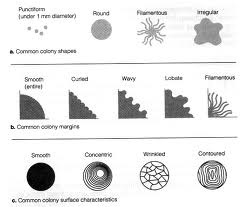
For a larger image of this Bacterial Colony Morphology Chart see Page 2.
Page last updated: 3/2016

Colony Morphology & Identification of Bacteria
The term “colony morphology” refers to the visible characteristics of a colony. Colonies that differ in appearance are typically different bacterial strains, species, or genera. However, colony morphology is not a reliable way to identify bacteria, as many different types of bacteria have similar colony morphology.
Being able to visibly differentiate bacteria based on the appearance of their colonies is a crude, but essential first step in isolating the different types of bacteria in the sample.
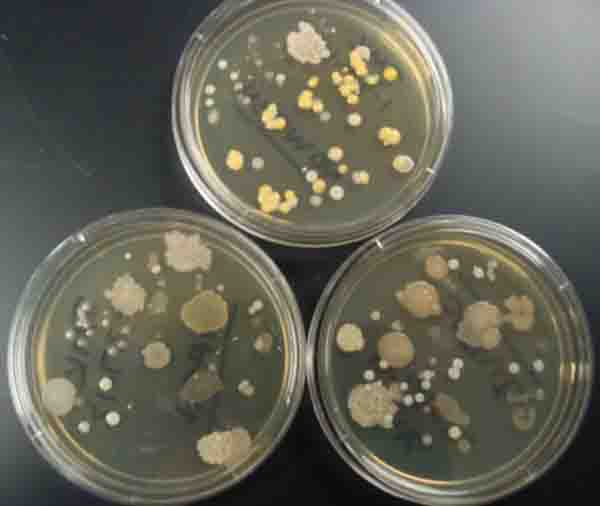
Touch plates showing a variety of bacteria found on the fingertips.
You have free access to a large collection of materials used in two college-level introductory microbiology courses (8-week & 16-week). The Virtual Microbiology Classroom provides a wide range of free educational resources including PowerPoint Lectures, Study Guides, Review Questions and Practice Test Questions.

