
 | ||||
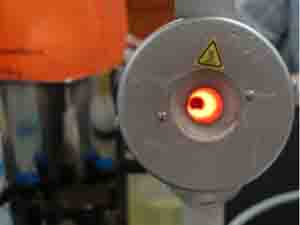
How to Use a Microincinerator in a Microbiology Laboratory
LAB NOTES from Science Prof Online
This sterilization instrument consists of a ceramic tube surrounded by metal and with a hollow portion at the center. When plugged in and turned on, the microincinerator can reach temperatures of 800 degrees centigrade, more than sufficient to incinerate any organic material on an inoculation loop.
Article Summary: A microincinerator, also known as a bactoincinerator, is a device used in microbiology laboratories to sterilize instruments.
Use of a Microincinerator in Microbiology Laboratory
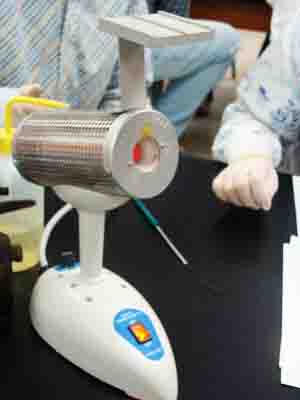
Microincinerator with slide tray for heat fixing bacterial smears.
How Is a Microincinerator Used?
There are two main purposes for which a bacto-incinerator is used in a college microbiology laboratory:
- sterilizing an inoculation loop
- heat fixing bacterial smears onto microscope slides
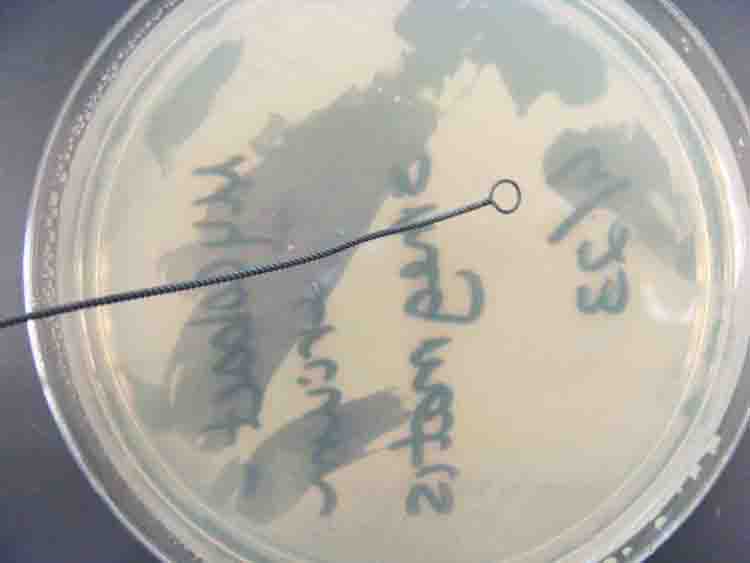
Inoculation loop shown with plate of sterile TSY agar
Page last updated: 2/2016

| ||||||
SPO VIRTUAL CLASSROOMS
Why Is a Microincinerator Necessary?
In a microbiology laboratory contamination of sterile materials must be avoided, and this can be difficult since bacteria and fungal spores are present throughout the surrounding environment. Avoiding contamination requires use of aseptic technique as well as being constantly mindful of each action performed in the microbiology laboratory.
Sometimes bacteria that are purposely grown in a laboratory environment must be transferred from one location to another, such as when a microbiologist is trying to isolate a specific type of bacteria from a clinical sample, or when multiple Petri plates of a specific type of bacteria need to be created for a classroom of microbiology students.
Bacteria are often transferred using an inoculation loop (a.k.a. inoculation wand). This instrument is essentially a wire with a small loop at one end and a handle at the other. Since it is made of metal, it can be repeatedly used and then resterilized in a flame or microincinerator. Open flame, however, is potentially dangerous, whereas sterilization by microincinerator is relatively safe.

| ||||
You have free access to a large collection of materials used in a college-level introductory microbiology course. The Virtual Microbiology Classroom provides a wide range of free educational resources including PowerPoint Lectures, Study Guides, Review Questions and Practice Test Questions.

Continued... Go to PAGE 2 >

