Prokaryotic and Eukaryotic Cell Diagram


Prokaryotic and Eukaryotic: 
Two Basic Types of Biological Cells

from Science Prof Online

CELL BIOLOGYMICROBIOLOGYPOWER POINTS

VIRTUAL CLASSROOMS


Science Prof Online (SPO) is a FREE science education website. Donations are key in helping us continue to provide this FREE resource. 
Please help!

(This donation link uses PayPal on a secure connection.)

Additional Cell Biology Information
To learn more about various topics within cell and microbiology see the websites Virtual Cell Biology Classroom of Science Prof Online and Cells Alive.

Sources
Bauman, R. (2005) Microbiology.Pearson Benjamin Cummings
Park Talaro, K. (2008) Foundations in Microbiology.

This article originally appeared on Suite101 online magazine.

Page last updated 2/8/2012

Article Summary: There are only two basic types of cells, primitive prokaryotes and the more complex eukaryotes. Here are the main features that distinguish these cell types.

Prokaryotic & Eukaryotic: Two Types of Biological Cells
Features of Prokaryotes
Pro = “before”, karyon = “nucleus”
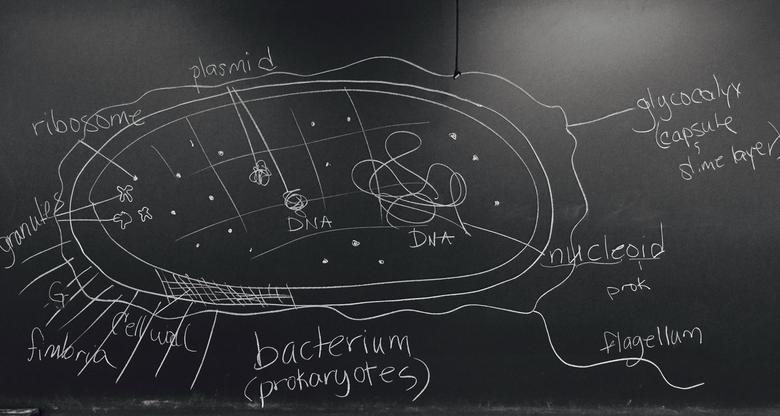
Prokaryotes, the first living organisms to evolve, are primarily distinguished by the fact that they lack a membrane-bound nucleus. In fact, the only membrane in prokaryotic cells is the plasma membrane--the outer boundary of the cell itself. Their genetic material is naked within the cytoplasm, ribosomes their only type of organelle.

Prokaryotes are most always single-celled, except when they exist in colonies. These ancestral cells, now represented by members of the domains Archaea and Eubacteria, reproduce by means of binary fission, duplicating their genetic material and then essentially splitting to form two daughter cells identical to the parent.
Prokaryotic Cell
Image of a prokaryotic cell. For a labeled diagram of same cell, click here.
Features of Eukaryotes
Eu = “true”, karyon = “nucleus”
The most noticeable feature that differentiates these more complex cells from prokaryotes is the presence of a nucleus, a double membrane-bound control center separating the genetic material, DNA (deoxyribonucleic acid), from the rest of the cell.

The plasma membrane is part of the eukaryotic cell's endomembrane system composed of different membrane-bound organelles that transport materials around the cell. Energy producing organelles, such as mitochondria and chloroplasts, are both believed to have evolved from prokaryotes that began living symbiotically within eukaryotic cells. These vital organelles are involved in metabolism and energy conversion within the cell. Other cellular organelles within eukaryotic cell structure carry out the many additional functions required for the cell to survive, thrive, grow and reproduce.

Eukaryotic cells can reproduce in one of several ways, including meiosis (sexual reproduction) and mitosis (cell division producing identical daughter cells).

Animal Eukaryotic Cell, Mariana Ruiz
Image of generic eukaryotic animal cell. For a labeled diagram of same cell, click here.
Drawing of a Plant Cell
Image of generic eukaryotic plant cell. For a labeled diagram of same cell, click here.
Only a few hundred years ago it was believed that living things could spontaneously generate, moment by moment, from non-living matter. We now know better. Cell theory lays out the basic rules that apply to the smallest unit of life. This cell doctrine states that:

  •  All organisms are composed of one or more cells.
  •  Cells are the basic unit of structure and function in organisms.
  •  All cells come only from other cells.


Two Basic Types of Cells
All cells fall into one of the two major classifications: prokaryotes or eukaryotes.

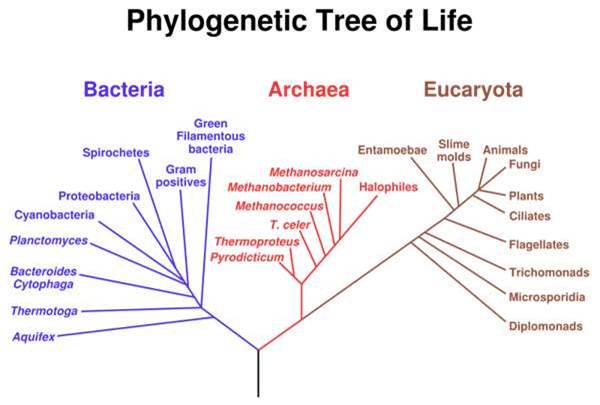
Prokaryotic Cells: Prokaryotes are evolutionarily ancient. They were here first and for billions of years were the only form of life. And even with the evolution of more complex eukaryotic cells, prokaryotes are supremely successful. All bacteria and bacteria-like Archaea are prokaryotic organisms.

Eukaryotic Cells: Eukaryotes are more complex, evolving from a prokaryote-like predecessor. Most of the living things that we are typically familiar with are composed of eukaryotic cells; animals, plants, fungi and protists. Eukaryotic organisms can either be single-celled or multi-celled.

Virtual Cell Biology
Classroom


You have free access to a large collection of materials used in a college-level introductory Cell Biology Course. The Virtual Cell Biology Classroom provides a wide range of free educational resources including Power Point Lectures, Study Guides, Review Questions and Practice Test Questions.
Endomembrane System of a Eukaryotic Cell, Mariana Ruiz
Photos of prokaryotic & Eukaryotic Cells Button
SCIENCE PHOTOS