| ||||
Differential & Selective Bacterial Growth Media
MacConkey's, Mannitol Salt & Blood Agar

Bacterial growth media are used in labs to provide nutrients, moisture and a surface for bacteria to grow on. Some media will grow just about any type of bacteria, whereas other types are specialized to only grow certain microbes and help to identify them.
Article Summary: Agar media are used to grow bacteria in the laboratory. There are also specialized media that provide information on the identity of the microbes growing.
Differential & Selective Bacterial Growth Agar
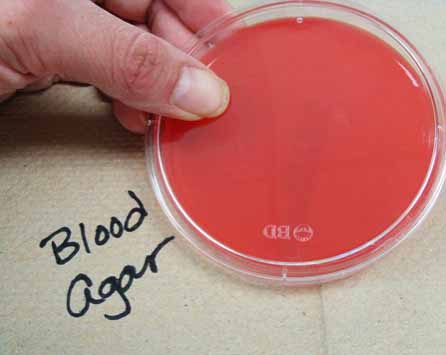

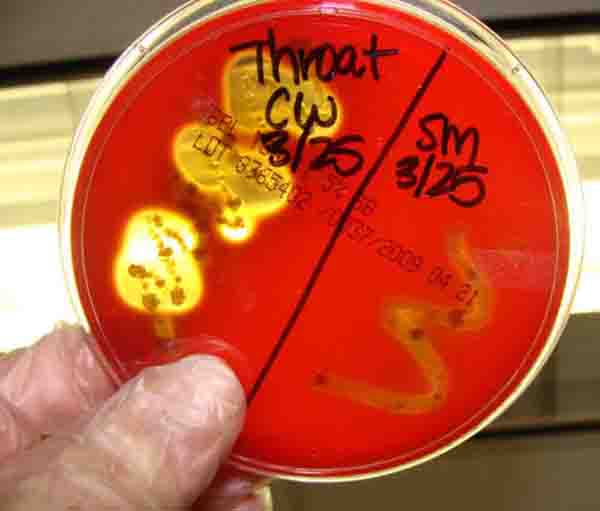

1. Sterile Blood Agar plate, 2. BAP alpha hemolysis; 3 & 4. beta hemolysis; 5. gamma would show growth on top of the media, but when viewed from the bottom, shows no change in the red color of the medium.
Click here for more Blood Agar Images.

SCIENCE PHOTOS
| ||||||
SPO VIRTUAL CLASSROOMS
VIDEO: How to Interpret
Blood Agar (BAP) Specialized
Bacterial Growth Medium


SCIENCE VIDEOS

Selective Bacterial Growth Media
Specialized media can be selective; formulated to grow only certain microbes while inhibiting the growth of others. For example MacConkey’s (MAC) selective bacterial growth medium will only grow Gram-negative bacteria. Mannitol Salt medium (MSA) will only grow halophilic (salt-loving) bacteria, such as Staphylococcus & Micrococcus. While selective media do not typically identify bacteria down to the species level, they do help narrow down the search.
Differential Bacterial Growth Media
Differential media typically display some type color change in the presence of certain bacteria. Blood Agar (BAP) is another type of differential medium. BAP is rich in nutrients and contains sheep blood. It is not selective, and will grow many different types of microbes. Blood agar medium is, however, differential. It will display a color change in the presence of bacteria that can lyse (break down) the red blood cells in the medium. Bacteria that grow on this medium will produce one of three hemolytic patterns:
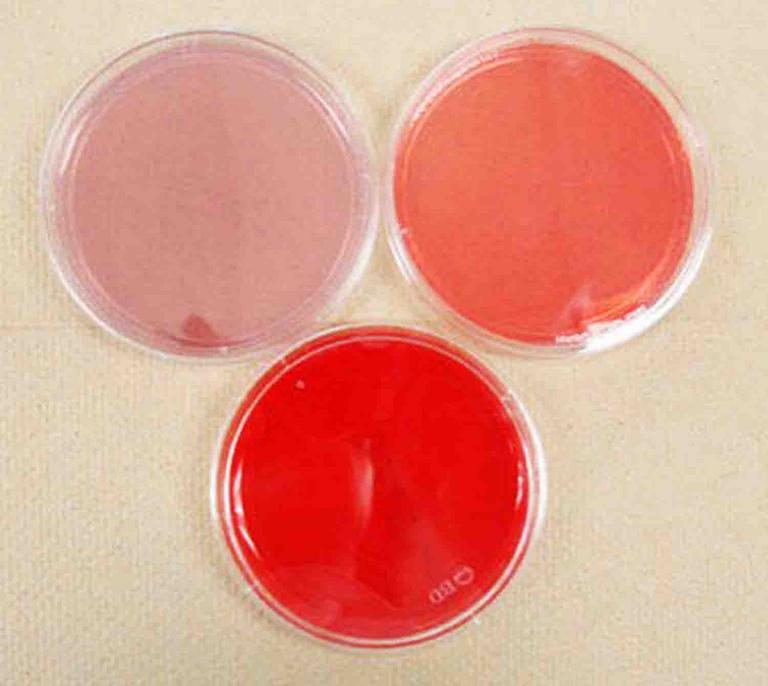
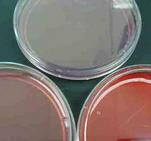
(clockwise from top left)
Page last updated:
8/2015
The SPO website is best viewed in Microsoft Explorer, Google Chrome or Apple Safari.
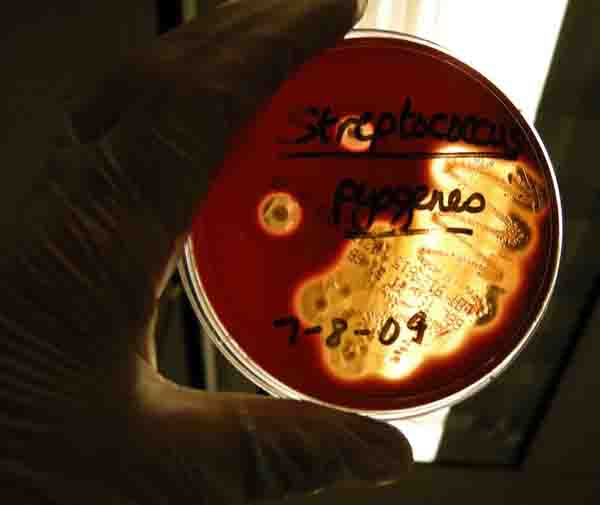
The beta-hemolytic bacteria Streptococcus pyogenes, is a pathogen that will completely break down the red blood cells in this agar, causing clear areas to form around its colonies growing on BAP.
- alpha-hemolysis = partial lysis of the red blood cells, which gives the medium a bruised appearance
- beta-hemolysis = complete lysing of the red blood cells, which turns the agar from red to clear
- gamma-hemolysis = no lysis of the red blood cells and no change to the appearance of the mediums color