
 | ||||

Scientific Method
Practice Test Questions
from Science Prof Online

Scientific Method Sample Test Questions
Free review questions to help students better understand
SPO VIRTUAL CLASSROOMS
| ||||||
1.What is the correct order for steps in the scientific method?
a. have a question, formulate hypothesis, develop method, gather data, draw conclusion.
b. formulate hypothesis, have a question, develop method, gather data, draw conclusion.
c. formulate hypothesis, have a question, gather data,develop method, draw conclusion.
d. have a question, formulate hypothesis, draw conclusion, develop method, gather data.
2. Any study done carefully and based on observation is scientific.
a. True b. False
3. Edward Jenner hypothesized that putting a scab from a cowpox lesion into a small cut on the body of his human subject would prevent them from contracting smallpox. What did he base this hypothesis on?
a. cows never came down with smallpox
b. Jenner's belief that scabs had magical powers
c. the fact that if you had smallpox you could not catch cowpox
d. farm workers' belief that those who had contracted cowpox never seemed to catch smallpox
4. A hypothesis is a scientific question.
a. True b. False
5. Spallazani and Needham both performed similar experiments. Why did they arrive at different conclusions?
a. Because spontaneous generation is both true and false.
b. Because they used different types of broths.
c. Because Spallazani sealed his flasks so that they were not open to the outside environment once the contents had been boiled.
d. Because Needham did not heat his broth to a high enough temperature.
6. Science can be differentiated from non-science because scientific results...
a. are repeatable
b. always take place in a laboratory
c. are based on a single, important event
d. are based on opinions
Page last updated: 9/2015
The following questions, from the free science education website Science Prof Online, are designed to help students better understand the scientific method. All questions are based on materials that can be found on the Scientific Method Lecture Main Page.

7. Parapsychology, the study of paranormal psychological phenomena such as telepathy (thought communication), clairvoyance (“sixth sense”), and psychokinesis (moving things with the mind) would be considered:
a. Science b. Non-science c. Pseudoscience
8. Needham and Spallazani were two scientists involved in what scientific debate?
a. The validity of evolutionary theory
b. The existence of viruses
c. Ways to keep food from spoiling
d. Spontaneous generation
e. Difference between prokaryotes and eukaryotes
9. Pseudoscience is not science because...
a. it is make believe
b. its claims CANNOT be tested scientifically
c. it is outside of the realm of science
d. it makes claims that CAN be scientifically tested, but are not
10. Which of the following is most true?
a. The progress of science is determined by what kind of questions are asked.
b. A stated hypothesis is always correct.
c. Scientists cannot make errors.
d. Empirical evidence will not support hypotheses.
| ||||
Science Prof Online
has several
Virtual Classrooms
including:
(15 week)
(15 week)
(8 week)
(8 week)
(15 week)

| ||||||
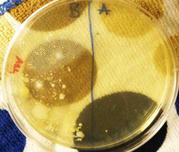
See a microbiology experiment on how well this steam mop cleans floors.
